

Choosing a Travel Scooter
It is essential to take into account the cost and ease of use when selecting a travel scooter. A good choice is the GLION SNAPnGO with a basic bones frame which allows it to fold quickly and easily, while still being extremely durable.
This lightweight, FAA-approved folding mobility scooter can disassemble into pieces that can be tucked away in an airplane's overhead compartment. It also comes with an armrest-friendly seat that is comfortable.
Folding or disassembling
It is much easier to transport a mobility scooter if it is foldable or disassembled. If your loved one will be bringing it into and out of their vehicle frequently it will make the process easier. It's also an excellent option for those who intend to use their scooter while traveling, such as when on vacation or at work.
When you shop, first consider the scooter's weight. The heavier a scooter is the more difficult it is to lift into and out of the trunk. Although the majority of travel scooters tend to be lightweight but it is crucial to check the weight of their heaviest parts to ensure that your loved ones can handle them.
The lightest mobility scooters that are available are the TravelScoot Cruiser and Escape. These models weigh only 23 or 30 pounds fully assembled and can be folded down by lifting a lever clamp from the seat assembly. This means that the entire process from beginning to end can be completed in less than 60 seconds!
Adjusting the tiller is a different option to make your scooter portable. The tiller is the steering controls and includes a lever for adjusting the forward and reverse direction as well as the speed control settings. In the tiller of many scooters, you'll also find a battery indicator, a turn signal, and headlight. To make your scooter more compact you can take off the front basket by removing it from the tiller and setting it aside.
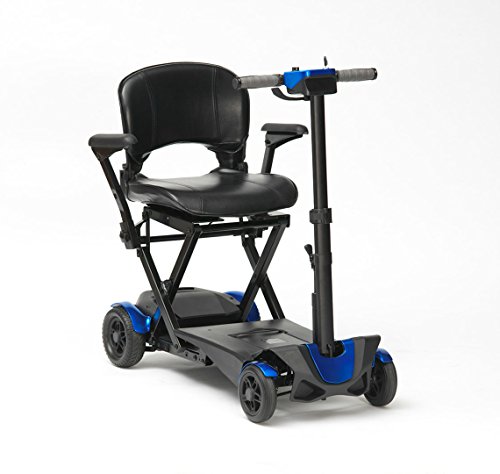
Most travel scooters disassemble or fold down, which is why it's essential to know where the parts are located before purchasing. The manufacturer's manual will provide more details but the majority of disassembly involves taking off the seat, the basket, and the battery pack. Some scooters also have a lever near the base that can be used to fold the tiller down and secure it.
If you're looking for a portable scooter that has more features for comfort than folding mobility scooters, think about the Golden Buzzaround Carry-On. It folds down into a compact, sleek package that is able to fit into tight spaces, such as the closet or under your bed. It is also suitable for transport on cars, planes, or trains.
Width
When choosing a mobility scooter, it is crucial to consider the maximum width. The width of a mobility scooter should be large enough that the driver can sit comfortably on the backrest. It must be wide enough for the scooter to fit through doorways or corridors with at least six inches on each side.
A wide variety of sizes are available, with several models that fold down to a height close to that of a suitcase. Some, such as the FreeRider Luggie Super, are extremely compact and can be easily carried in a trunk of a car or any other vehicle. They have the smallest turning radius and highest speed, making them perfect for indoor use.
Be sure to check the maximum width of the coach or bus before deciding to use your mobility device while on public transport. These may differ from the minimum width of the typical mobility scooter and may make it difficult for disabled people to operate their scooter on board.
When selecting a mobility scooter the turning radius as well as ground clearance are also important factors. Some people aren't afraid to ride on rough terrain. Others might prefer a model with less of a turning radius. This will allow them to maneuver around tight corners and busy streets in urban areas.
A lot of scooters feature a tiller at the front of the steering wheel with controls for speed as well as forward/reverse directions located on the tiller. These controls are usually operated by thumb paddles or finger controls that can be adjusted to meet the preference of the user. Some scooters come with additional controls for lighting indicators, battery status and lights, but these are optional features.
It is best to seek help when using a scooter for indoor use. This allows you to fit the scooter into narrow corridors or doors. This person can walk alongside the scooter while it is being pushed into the doorway, and make sure it is able to clear it before making any abrupt turn.
best travel scooter on a travel scooter are an important factor in how smooth and comfortable the ride will be. The tyres are either solid, foam filled or pneumatic. Pneumatic tyres (air-filled) provide the most smooth ride, but they have to be kept at the right pressure or they will puncture. Solid tyres aren't punctured, but don't absorb bumps as well. Most full-sized scooters have pneumatic tyres, but some models that are portable or travel-friendly may have foam-filled or solid wheels as a standard feature or an added-on.
Three-wheel mobility scooters are easier to maneuver and have a tight turning radius than four-wheel mobility scooters, however they're less stable and may tip over on uneven surfaces such as sidewalks. They come with a safety function called an Anti-Tip System that reduces this risk by shifting the weight distribution to the rear wheels.
Four-wheel scooters provide more stability than three-wheelers and they can be used on any terrain, including bumps or ramps. They can also be fitted with suspension systems, making them more comfortable on these types of surfaces.
The majority of travel scooters come with seats that can swivel, making it easy for users to take off and on. The seat height can be adjusted to ensure that the user can get a comfortable position. Some have headrests as well as arm rests for added comfort.
Some models have a basket that can be affixed to the front of the scooter, so it can carry bags or shopping. This makes it much easier to shop for your groceries or take the kids to school without having to lift them. It's also a great option to transport things around the house such as cleaning products or a laptop.
Many scooters come with a variety of accessories, including mirrors and lights. Some come with a charging port on the tiller. This is useful for owners of scooters who wish to customize their vehicle to meet their requirements. Some brands offer a variety of color panels that can be changed to alter the look of the scooter.
Stores
There are a variety of storage options available for a travel scooter. The most commonly used storage option is a front-facing basket that is attached to the tiller. This is typically small and has enough space to store personal items on short trips. You can expand the capacity of your scooter by adding a rear basket, or saddlebags. You can also opt for a mobility scooter with under-seat space or an accessory storage box for your scooter.
Depending on the amount of time you'll utilize your scooter in the outdoors, consider choosing a model with an extended battery life. The last thing you want is to lose energy halfway through your trip. You can also buy a rain cover to safeguard your mobility scooter. This will keep it dry and secure in the event of a sudden rainstorm.
Many people who use travel scooters are concerned that their mobility scooters will break or be stolen during travel. This is a valid concern, as many mobility scooters aren't handled with care and may break during transport on cars or trains or even airplanes.
For this reason, it's important to find a quality mobility scooter that's built to last and secure. You should also invest in a good lock that protects your scooter against theft. Another option is to keep your mobility scooter in a safe garage or shed outside. This will shield it from the elements, however it is less efficient than storing your scooter in a portable shed.
The provision of storage for mobility scooters in buildings should be considered at the design stage to reduce fire hazards and to ensure residents' right to a quality of life, which includes using the scooter. The store should be situated closest to the building's entry point without compromising fire safety guidelines. It must also have well-lit walkways with compliant steps as well as handrails at any changes in the level. The storage area should also be kept at a safe distance from electrical wiring to reduce the chance of electrocution. The storage area should also be inspected regularly and maintained to ensure that it meets all safety and health requirements.